Farever
Farever is an online multiplayer action RPG set in a vibrant fantasy open world. Explore Siagarta, clear dungeons, craft powerful gear, build your own class style, and follow the Early Access roadmap.
Latest Updates
Discover the newest guides, tips, and content
Farever Arsenal: Complete Weapon & Skill System Guide 2026
Master the Farever arsenal system with our comprehensive guide to weapon skills, Arsenal slots, and class synergies for the 2026 Early Access launch.
Farever Builds: Ultimate Class Guide & Progression 2026
Master the world of Far Ever with our comprehensive class breakdown and build strategies. Optimize your playstyle for 2026.
farever cant connect to server: Troubleshooting & Region Fix Guide 2026
Having trouble logging into Farever? Learn how to fix server connection issues, reduce lag, and use the region-swap workaround to play without delays.
farever clawdius: Boss Guide, Tactics, and Loot Drops 2026
Master the farever clawdius boss fight with our expert guide. Learn attack patterns, best class builds, and how to farm rare loot in Siagarta in 2026.
Farever Cost: Price, Early Access Details, and Value Guide 2026
Explore the complete Farever cost breakdown, including Steam regional pricing, launch discounts, and Early Access content value for Shiro Games' Action RPG.
Farever Demo: Complete Early Access Guide and Tips 2026
Looking for a Farever demo? Explore our comprehensive guide on Early Access features, classes, combat mechanics, and system requirements for 2026.
farever dungeon drops: Ultimate Gearing & Farming Guide 2026
Master farever dungeon drops with our complete 2026 guide. Learn the best dungeons for epic gear, faction rewards, and speed-farming strategies.
Farever Guild: Complete Progression & Social Systems Guide 2026
Master the Farever guild systems, inventory management, and early-game progression. Learn how to use the Guild Merchant and prepare for upcoming social features.
farever invite friends: Complete Multiplayer & Co-op Guide 2026
Learn how to farever invite friends and set up co-op parties in Siagarta. Our 2026 guide covers server regions, Steam invites, and group combat strategies.
farever key: Essential Guide to Unlocking Rare Rewards 2026
Master the farever key system in 2026. Learn farming locations, drop rates, and the best ways to spend your keys for maximum progression.
Farever King Ratsar: Complete Boss Guide & Strategy 2026
Master the Farever King Ratsar boss fight with our expert strategy guide. Learn attack patterns, best class builds, loot drops, and solo or co-op tips.
Farever King Ratsar Location: Boss Guide & Strategy 2026
Discover the exact Farever King Ratsar location in Siagarta. Learn boss mechanics, recommended builds, and loot drops for this Early Access encounter.
Farever Module Navigation
Jump to every core topic: launch details, classes, builds, dungeons, loot, roadmap, and system performance.
Farever Early Access Release
Release date, platform, launch pricing, and access details
Farever Beginner Guide
First-session priorities, progression flow, and early goals
Farever Classes Guide
Cleric, Mage, Rogue, Warrior roles and playstyle fit
Farever Best Class Picks
Role-based recommendations for solo and co-op players
Farever Builds and Playstyles
Build directions by class, role, and combat preference
Farever Weapons and Arsenal
Weapon families, skill synergy, and loadout structure
Farever Combat Guide
Dodging, cooldown flow, positioning, and team execution
Farever Map and Exploration
Regions, landmarks, traversal routes, and discovery pacing
Farever Dungeons, Instances, and Bosses
Track dungeon and boss entries with role-focused clear goals
Farever Loot Sources and Drop Tables
Find drop rates for monsters, bosses, gathering nodes, and vaults
Farever Crafting Jobs and Recipes
Compare professions, recipe counts, and practical early crafts
Farever Gear Items and Rarity Guide
Use category and rarity filters to keep only useful upgrades
Farever Mounts Pets and Gliders
Collection goals, rare drop mounts, glider routes, and cosmetic rewards
Farever Solo and Co-op Multiplayer Guide
Solo progression, 4-player parties, shared loot, and regional servers
Farever Roadmap and Upcoming Content
Launch baseline, world expansion, class growth, and 1.0 direction
Farever System Requirements and Performance Guide
Minimum and recommended specs, server regions, and FPS targets
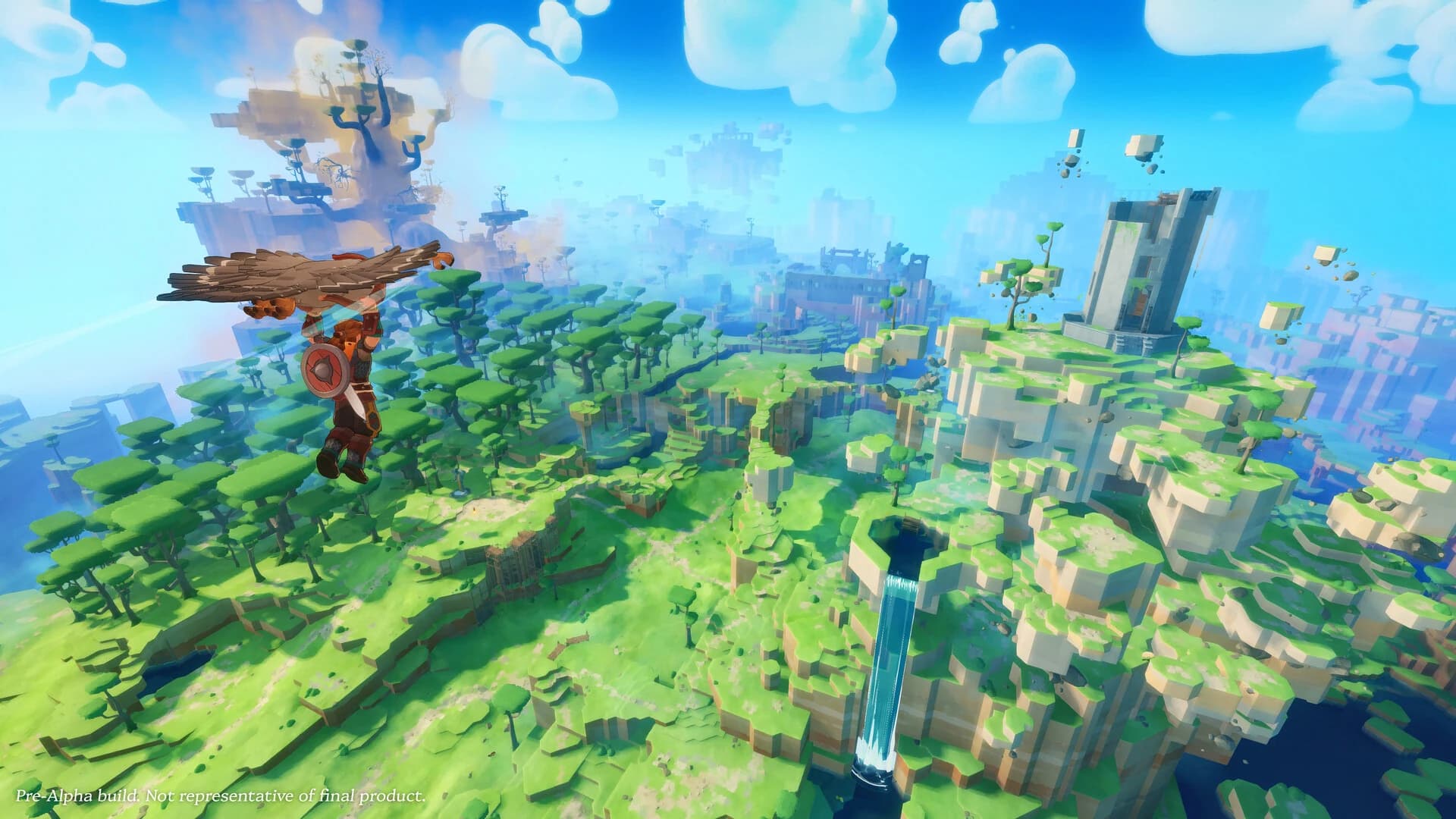
Farever Early Access Release and Download
Farever is live on Steam Early Access, and this section gives the fastest launch snapshot for new and returning players.
Check the current release status
The game is available now in Steam Early Access for PC, with active live-service updates during the access period.
Review launch pricing by region
Pricing varies by currency region. Check your Steam storefront to confirm the current local price and launch promotions.
Confirm platform and account setup
A Steam account and PC installation are required. Keep your client updated to avoid matchmaking and version mismatch issues.
Pick the closest server region
Choosing the nearest region reduces latency, improves combat responsiveness, and stabilizes party play in instanced content.
Quick Tips
- Use the Steam store page as the source of truth for price and package updates.
- If a launch offer is active, buy within the visible countdown window in your region.
- Coordinate server region with friends before creating your first party session.
- Keep graphics drivers current before first launch to avoid shader compilation issues.
Farever Beginner Guide
Early progress in Farever is smoother when you follow a simple loop: explore, fight, gather, craft, and then push into harder content.
Start with map awareness
Learn travel routes, safe recovery spots, and fast return paths before you chain difficult encounters.
Commit to one class first
Focus one class and one role in your first hours so your gear and skill decisions stay efficient.
Rotate activities for materials
Alternate open-world events, dungeon runs, and gathering routes to keep both combat and crafting progress moving.
Upgrade in short cycles
Apply small upgrades frequently instead of waiting for perfect drops. Consistent gains matter more than rare spikes.
Farever Classes Guide
Farever launches with four core classes. Choose based on role responsibility, positioning comfort, and the pace you enjoy in combat.
Warrior
Durable melee control with steady pressure. Great for players who want direct engagement and stable survivability.
Cleric
Team utility and sustain focus. Strong in group content where timing and support rotations shape fight consistency.
Mage
Spell-driven damage from range. Rewards clean spacing and cooldown sequencing for safe, high-impact output.
Rogue
Fast melee burst with high movement demands. Best for aggressive players who can manage risk windows.
Solo class priority
Warrior is the easiest starting point for solo progression due to forgiving frontline play and smooth early stability.
Party class priority
Cleric and Warrior form the most reliable beginner duo foundation before scaling into specialized team compositions.
Farever Best Class and Role Picks
Pick classes by objective instead of chasing a universal tier list. The best option changes with your role and group context.
Best beginner baseline
WarriorStrong survivability and straightforward combat flow make Warrior the most stable first pick for new players.
Best co-op anchor
ClericCleric raises team consistency through sustain and support utility, especially in extended dungeon encounters.
Mage excels when your team needs safe damage uptime and strong ranged burst during boss mechanics.
Rogue is ideal for players comfortable with mobility-intensive execution and aggressive timing windows.
Management Tips
- For solo starts, prioritize durability and recoverability before peak damage.
- For duos, pair frontline stability with support coverage for smoother clears.
- For full parties, diversify roles to avoid overlapping cooldown gaps.
- Re-evaluate your role after each major gear milestone rather than every run.
Farever Builds and Playstyles
Build strength in Farever comes from class identity, weapon synergy, skill sequencing, and stat discipline working together.
Bruiser control builds
Frontline setups that trade burst for uptime, using mitigation and sustained pressure to hold space in group fights.
Ranged burst builds
High-output casting patterns focused on cooldown timing, spacing, and safe windows during boss phases.
Mobility pressure builds
Fast melee patterns that chain movement skills into burst opportunities while avoiding overcommitment.
Support utility builds
Team-first configurations that stabilize encounters through sustain, mitigation, and utility skill cadence.
Match weapon families to your role goal
Stack stats that reinforce your combat loop
Use defensive tools before overloading damage slots
Refine one build path at a time for clear upgrades
Farever Weapons and Arsenal Guide
Weapon choice changes how each class feels. Focus on handling profile, skill synergy, and encounter type when building an arsenal.
Close-range weapon sets
Frontline ArsenalBest for sustained pressure and control in melee lanes. Pair with durability and recovery-focused stats.
Ranged catalyst sets
Caster ArsenalSupports spacing-heavy combat with strong burst windows and flexible utility between cooldown cycles.
High-tempo duel sets
Mobile ArsenalFast execution profile for players who prefer short commit windows and active positional control.
Hybrid support sets
Team ArsenalBalanced loadouts that maintain utility uptime while preserving enough personal damage to contribute.
Farever Combat Guide
Winning harder encounters is less about raw stats and more about timing discipline, positioning, and coordinated cooldown use.
Open with spacing checks
Start each pull by reading enemy reach and movement speed before committing high-cooldown skills.
Dodge before burst
Avoid avoidable damage first, then convert recovery windows into safe burst cycles.
Preserve one emergency tool
Keep one defensive cooldown or mobility option for unexpected mechanics and late-phase pressure spikes.
Respect boss phase shifts
When phase behavior changes, reset spacing and re-establish role positioning before re-engaging.
Coordinate party roles
Call defensive rotations and target priority to avoid overlapping mistakes in multi-wave fights.
Track stamina and cooldown rhythm
Stable clears come from rhythm control, not constant aggression. Plan tempo around reliable resource windows.
Farever Map and Exploration Guide
Exploration efficiency in Siagarta depends on route planning, vertical traversal awareness, and consistent return loops for upgrades.
Primary region loops
Build repeatable loops between activities, gathering points, and recovery hubs to reduce idle travel time.
Landmark-based navigation
Use distinct terrain markers and settlement anchors to keep route memory reliable across long sessions.
Vertical pathing
Prioritize movement tools that shorten climbs and descents, especially near event-dense terrain.
Cave and side-path sweeps
Secondary paths frequently contain valuable materials and shortcut opportunities for future runs.
Underwater and hazard routing
Approach hazard zones with planned entry and exit points so failed attempts do not waste progression time.
Session-end consolidation
Finish each route near a crafting or storage hub to immediately convert gathered resources into progression.
Farever Dungeons, Instances, and Bosses
Farever Early Access lists ten instance encounters split into five dungeons and five boss fights. Use this tracker to plan clear order, assign party jobs, and prepare for higher-difficulty modes when they launch.
Run a repeatable combat route with pack control, resource checks, and a boss finish that supports steady gear progression.
Focus on fixed encounter pacing instead of open-world roaming to practice rotations and coordination under pressure.
Push through bee-region encounters to progress linked materials, instance rewards, and boss readiness.
Farm kobold-focused routes for cave progression items and dungeon reward loops that feed crafting jobs.
Clear underwater ruin objectives for a different encounter rhythm and expanded route variety beyond open-world camps.
Use this encounter for pattern learning, burst-window discipline, and rare reward targeting with coordinated roles.
Track clears to stabilize bee-region progression and validate survivability setups before harder content.
Treat this fight as a mechanical step-up where timing and sustained execution matter more than one-shot attempts.
Keep this boss in your progression sheet as a milestone encounter for build consistency and team rhythm.
Prioritize this clear for kobold-route progression and boss-specific drops tied to weapon and glider goals.
Plan long-term build upgrades around future difficulty tiers so current farming choices still pay off later.
Farever Loot Sources and Drop Tables
Use source-first farming routes when you already know the item you want. This table summary maps monsters, bosses, gathering nodes, and vault rewards so loot runs stay efficient and repeatable.
AncientThyme and Ore_Copper Gathering
Gatherables supply stable baseline materials: AncientThymePetal and CopperOre at 100%, plus SparkSample around 25% for early crafting loops.
Bee and Boar Monster Routes
Bee and Boar routes provide high-volume crafting drops with rare mounts at 0.10%, supporting both progression and collection goals in one loop.
Crab, Kobold, and Manfish Material Pools
Farm seafood, fang, scale, and glider materials by target family so recipe ingredients and mobility collection stay aligned.
Crabgantua Boss Drops (lv 8)
Target this boss for 1.0% weapon and mount rewards, including Shield_OrbitWater and Mount_Crab_Blue.
Nepsilon Boss Drops (lv 5)
Run Nepsilon for early 1.0% boss rewards such as Halos_Totem, DA_Water, and Glider_FlyingFish_Orange.
King Ratsar Boss Drops (lv 10)
Farm for Daggers_DuplicatePoison, GA_Craft, and Glider_Bat_WhiteBlack to support rogue builds and collectible goals.
Vault_Z1_1 Guaranteed Reward
Track this vault for guaranteed Gold and Glider_FlyingFish_Red when you need predictable progression payout.
Vault_Z1_2 Guaranteed Reward
Use this vault route for guaranteed Gold and Mount_Crab_Yellow to lock in collection progress without RNG variance.
Farever Crafting Jobs and Recipes
Farever recipe progression is centered on six professions. Compare each job by role, recipe count, and early-value crafts so your material farming feeds the right build upgrades.
Blacksmith · 21 Recipes
Main role
Metal gear, ingots, plates, and weapon/armor support for frontline progression.
Early value
Strong first pick for Warrior-style paths and durability-focused upgrades.
Example crafts
CopperIngot (lv 1), BronzeIngot (lv 3), Alloy_Z1 (lv 4), and Chest_RKobold_FigAss (lv 1).
Outfitter · 20 Recipes
Main role
Cloth and leather gear, bags, back pieces, and soft armor support lanes.
Early value
Reliable for bag upgrades and light-armor users who need faster inventory scaling.
Example crafts
Bag_Z2 (lv 3), Back_RCrimson_AssCle_Craft (lv 5), and Feet gear crafts at lv 1-3.
Jeweler · 32 Recipes
Main role
Gems, rings, pendants, prospecting, and stat-tuning upgrades for precision builds.
Early value
Best for players prioritizing jewelry slots and ore-to-gem conversion value.
Example crafts
CopperProspecting (lv 1), CutBeryl (lv 2), AttunedCutBeryl (lv 2), AttunedCutRuby (lv 4).
Alchemist · 35 Recipes
Main role
Elixirs, potions, and utility buffs supporting strength, dexterity, healing, and movement.
Early value
High-impact support profession for dungeon attempts and boss preparation windows.
Example crafts
ElixirOfMinorStrength, ElixirOfMinorDexterity, ElixirOfAbundance, and FastSwimPotion.
Cook · 20 Recipes
Main role
Food buffs and practical dishes built from common monster and fishing materials.
Early value
Excellent starter profession for repeatable sustain buffs during leveling routes.
Example crafts
Crab Goulash, Wild Boar Stew, Grilled Mackerel, and Plainswalker Feast.
Enchanter · 33 Recipes
Main role
Enchant papers, powders, formulas, and scroll support for gear scaling.
Early value
Strong for players who want stat formulas and later weapon enchant depth.
Example crafts
EnchantPaper_Z1, EnchantPowder_Z1, EnchantConcentrate_Z1, and Magic Formula: Strength.
Farever Gear Items and Rarity Guide
Use category, rarity, class, slot, and level filters to decide what to equip, craft, sell, or keep. Farever item coverage includes weapons, armor, consumables, components, gems, mounts, gliders, and upgrade currencies.
Farever includes broad collection systems for mounts, companions, gliders, and cosmetic rewards. These systems support mobility, exploration routing, and long-term collection goals during Early Access.
Farever Solo and Co-op Multiplayer Guide
Farever supports both solo play and 4-player co-op parties. The same core loop works across formats: explore, clear activities, run instances, defeat bosses, and progress your build.
Solo players can progress smoothly through regions, activities, crafting loops, and build upgrades while choosing their own pace and routing priorities.
4-player party structure
Play ModeParty groups can include up to four players, with role splitting across damage, sustain, control, and frontline pressure for faster and safer clears.
Shared loot, XP, and party rewards
Network SetupCo-op progression supports shared loot and XP flows, post-fight distribution, party trading windows, and shared completion value in repeatable content.
MMO-style world interaction
Team SetupPublic areas, world layers, chat channels, and region hubs allow players to meet others while exploring without forcing permanent party grouping.
Regional server and friend setup
Team SetupChoose the closest region before inviting friends to minimize latency. Current launch regions include Europe, North America, Latin America, Asia, and Mainland China.
Scalable activity difficulty
Activity FlowSeveral activity routes scale by group size so players can approach world objectives solo or with a team and still maintain progress efficiency.
Farever Roadmap and Upcoming Content
Farever launched with a strong Early Access baseline and a roadmap centered on world growth, deeper classes, more instance challenge layers, social systems, and long-term progression.
Early Access launch baseline
Launch includes four classes, level 20 progression, two regions, ten instance encounters, six jobs, 100+ weapon skills, 150+ gear pieces, and 100+ collection elements.
World expansion phase
Planned updates add new regions such as Peak of Obral and City of Ramburg, plus more factions, dungeons, bosses, world events, and activity types.
Instance progression updates
Roadmap targets include Heroic Mode, max-level instance modes, additional boss mechanics, challenge modifiers, and more unique completion rewards.
Character growth expansion
Progression direction includes raising the level cap toward 50, adding classes like Druid and Monk, and introducing deeper talent trees and class skill systems.
Collections and job depth
Future content plans include fishing, archaeology, more mounts, gliders, critters, toys, and major increases in unique weapons, skills, and gear pieces.
Social and PvP systems
Upcoming systems include guilds, auction house support, friends tools, duels, PvP regions, instanced battlegrounds, and party quality-of-life features.
1.0 release direction
The full release path aims to extend world scale, class variety, instance challenge, seasonal activities, and long-term social progression systems.
Farever System Requirements and Performance Guide
Use this checklist to match official hardware targets, choose the right server region, and keep stable 1080p performance during Early Access sessions.
Confirm operating system and storage baseline
Farever requires a 64-bit Windows setup and at least 25 GB free storage. Keep additional free space for patch downloads and update extraction.
Check CPU, RAM, and GPU tier fit
Minimum targets are around i7 6700K or Ryzen 5 5500, 16 GB RAM, and RTX 3060 or RX 5600 XT. Recommended targets move to 32 GB RAM with RTX 4060 or RX 7600 class GPUs.
Use the official FPS expectations
Minimum profile targets 1080p at 30 FPS and recommended profile targets 1080p at 60 FPS. Tune quality settings according to these baseline expectations.
Choose the nearest server region
Available regions include Europe, North America, Latin America, Asia, and Mainland China. Picking the closest region improves latency and party responsiveness.
Apply a repeatable performance checklist
If frame pacing drops, lower the highest-cost graphics options first, close background workloads, retest in a fixed combat route, and adjust one setting group at a time.
Need more optimization help?
Use official channels to share your logs and system details: